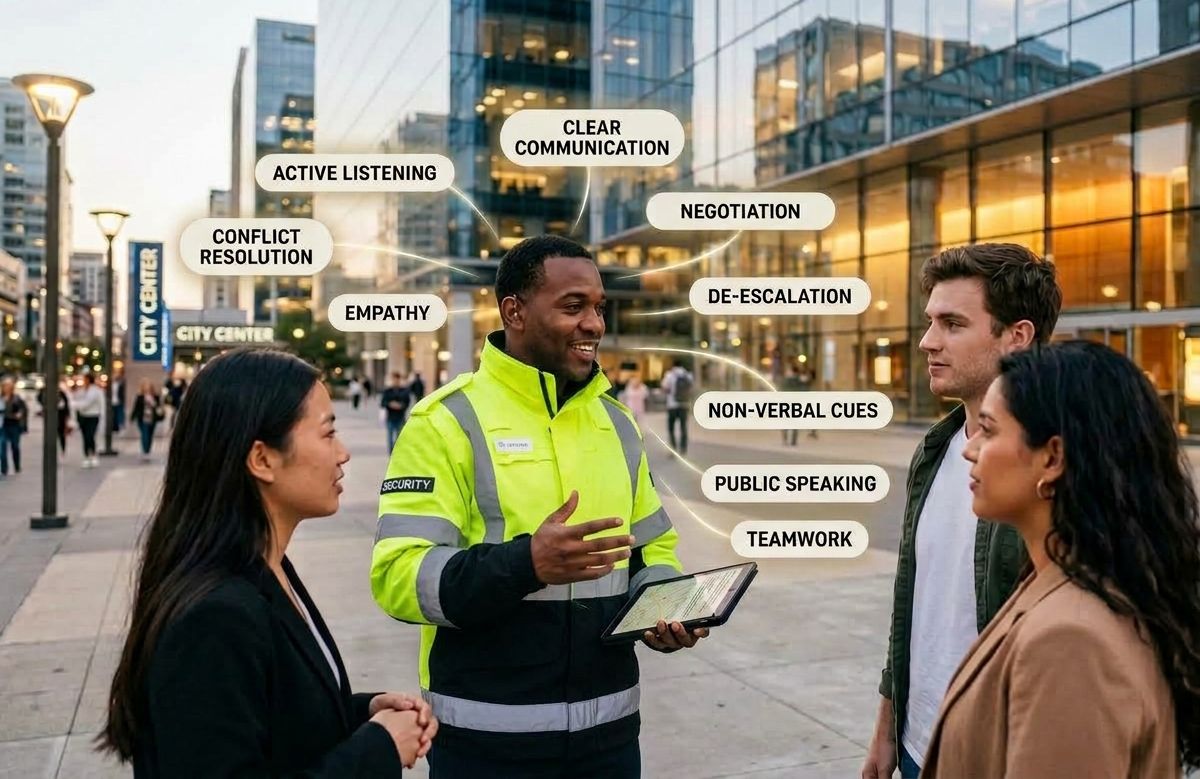
Why Becoming a Security Guard Is the Ultimate Communication Masterclass
When people picture working as a security guard, they often imagine physical patrols, monitoring access points, or standing watch. But ask anyone who has worked in modern private security, and they’ll tell you the real truth: your voice is your most important piece of equipment.
The modern security industry isn't about physical confrontation. It’s about building trust, defusing high-stress situations, and relaying accurate information under pressure. If you want to develop communication skills that set you apart in any career, here is how working in security trains you to do it faster and more effectively than almost any corporate training program.
1. Mastering Verbal De-Escalation
Physical intervention is always an absolute last resort. A professional security guard’s primary goal is to resolve conflict before it turns physical.
On your shift, you will encounter people experiencing bad days, high frustration, or emotional distress. You will learn quickly that aggressive language or an defensive posture only escalates tension. Instead, you develop the ability to:
Keep your tone calm, steady, and authoritative without sounding confrontational.
Acknowledge someone’s frustration so they feel heard.
This type of emotional composure under pressure is a rare, high-value skill that translates into leadership, sales, and management roles across every industry.
2. Learning Active Listening and Empathy
De-escalation doesn't work if you aren't listening. Security professionals constantly interact with the public, tenants, and visitors who need assistance, directions, or conflict resolution.
Working on-site forces you to listen to understand, not just to reply. You learn to spot unspoken details: body language, shifts in tone, and signs of distress. When you understand someone’s underlying issue, solving problems becomes faster and far more effective.
3. Clear, Fact-Based Reporting Under Pressure
Good communication isn't just spoken, it’s written. Security guards write Daily Activity Reports (DARs) and formal Incident Reports that may be reviewed by property managers, emergency services, or court officials.
Writing these reports trains you to strip away emotion, assumptions, and bias. Avoid using subjective language, such as "The visitor was acting shady and looking angry." Opt for more objective language, i.e. "The visitor paced the lobby for 15 minutes, spoke at an elevated volume and declined assistance."
Learning to present facts clearly, chronologically, and concisely is an asset whether you're compiling a police handover or drafting an executive workplace email.
4. Delivering Exceptional Customer Service
Security personnel are frequently the first face people see when entering an office tower, residential condominium, hospital, or commercial venue.
In many ways, security is high-level customer service with a safety focus. You practice presenting yourself with professional presence, greeting people warmly, and enforcing site rules with respect and discretion. Treating people with dignity while holding boundaries is the definition of professional communication.